
Ph. (08) 8362 7614 | E. admin@margaretives.com.au 
Ph. (08) 8362 7614 | E. admin@margaretives.com.au

At our Centre, we’re always looking for ways to support the well-being of our children and families, and sleep is a big part of that! Last year we were thrilled to welcome Georgina Wysiecki, founder of the Woodlands Sleep Collective, for an informative session on children’s sleep.
Georgina, a certified child sleep consultant based in Vancouver, joined us to chat with both families and educators about all things sleep—a topic that can often feel overwhelming and complex. Representatives from our Jacaranda, Bottlebrush, and Coral rooms attended, including Holly, Shelly, Kasha, Rochelle, Jo, and Hayley. We found the session incredibly insightful and wanted to share some of Georgina’s top takeaways with you.
Key Sleep Tips from Georgina
While there’s no one-size-fits-all approach—each child is unique!—Georgina shared some general strategies that can help support healthy sleep habits:
Why Connection Matters
One point that resonated deeply with many parents was Georgina’s emphasis on connection. After a long day apart, it’s easy to fall into the hustle of dinner, dishes, and bedtime routines. But to a child, this can feel like more time away from the people they’ve missed all day. Taking just 10–20 minutes of distraction-free time to reconnect—no phones, no tasks—can ease the transition to bedtime, reduce challenging behaviors, and support emotional well-being.
Sleep Needs by Age
Georgina also highlighted the importance of looking at the entire 24-hour day when considering your child’s sleep needs. Generally:
At our Centre, we support children’s individual sleep needs. If your child no longer naps at home, we provide a quiet space for meaningful rest. If a ‘no longer napping’ child does fall asleep at childcare, we will gently wake them after one sleep cycle (about 45 minutes), in line with our safe sleep policy. If we notice sleep (or lack of it) affecting your child during the day, we’ll always connect with you to discuss the best way forward—because your child’s well-being is our top priority.
Helpful Resources
To learn more about Georgina’s approach and explore additional tools, visit www.woodlandscollective.ca or follow her on Instagram at @woodlands.collective.sleep.
We’re grateful to Georgina for her time and expertise, and we look forward to continuing to support your child’s healthy sleep habits together.
— The Margaret Ives Team
At our Centre, we understand that early childhood is a time of rapid growth, development, and learning. Across all age groups, children are learning how to express their needs, emotions, and ideas — and sometimes, this can involve what we call “big feelings” and physical behaviours such as biting, pushing, or scratching.
These behaviours, while understandably concerning for families, are typical parts of early development. Children are still developing the language, emotional regulation, and social skills they need to express themselves effectively. When those tools aren't fully developed yet, some children may use physical means to communicate.
What We’re Doing at the Centre
Please rest assured that our educators are actively and compassionately supporting children through these important stages of development. Our approach includes:
We also increase educator support when needed and consult with external professionals to ensure every child receives individualised care and attention.
We understand how emotional it can be when your child is involved in a difficult peer interaction — whether they’ve been hurt or have hurt someone else. These experiences can stir up a range of feelings, and we want you to know: you’re not alone.
If Your Child Has Hurt Another Child
It’s normal to feel concerned, embarrassed, or unsure when your child has physically hurt another. You might question what it means about your child — or about your parenting. Please know: these behaviours are developmentally expected at this stage, and with patient support and guidance, children do learn other ways to express themselves.
Here are some ways to support your child at home:
If Your Child Has Been Hurt
It can be deeply upsetting to learn that your child has been hurt by another. You may feel worried, protective, or even angry. Please know that we take every incident seriously and prioritise each child’s emotional, physical, and social wellbeing.
Here’s how you can support your child at home:
Working Together with Families
In early childhood, most children will, at some point, both experience and initiate physical behaviours. These moments are part of early social learning and are not a reflection of a child’s character.
To ensure the wellbeing of all children and to maintain privacy and respect:
Our focus is not on blame, but on understanding, growth, and building a caring and respectful community. Thank you for partnering with us as we guide and support all children in developing empathy, communication skills, and emotional regulation.
If you have any questions or concerns, please don’t hesitate to reach out. We’re here for you and appreciate your trust in us.
Terminology
In South Australia, the terms Preschool and Kindergarten (‘Kinder’ meaning children and ‘garten’meaning garden) are interchangeable but mean the same thing. At the moment, children are eligible for 15 hours per week of Preschool in the year (4 terms) prior to commencing formal schooling. This may change when the “3 year old Preschool” roll-out commences in future. Long Day Care (LDC) refers to a service offering education and care in a childcare centre. An ELC (Early Learning Centre) is a title chosen to describe a LDC. It is no different to any other child care centre. Of course individual services may have some differences in what they offer, however all will base their curriculum on the The Early Years Learning Framework V2.0 (EYLF), are guided by the National Quality Standard and legislated by the National Law and National Regulations (ACECQA). It might also be helpful to know that in S.A. the first year of schooling is titled ‘Reception’. Other states refer to it as a variety of names including ‘Prep, Pre-primary, Transition, Kinder or Kindergarten’.
About Preschool at Margaret Ives
At Margaret Ives the Preschool children are referred to as the ‘Starfish group’ and are able to access 2 sessions of Preschool totalling 15 hours per week. Sessions offered are 8.30am-4pm, which is longer (per day) than many other Preschools. Parents also have the option of choosing to do LDC days booked on other days through the week, with the child remaining in the Preschool program for all days they attend.
Curriculum and Teaching
Curriculums the teachers use include the EYLF, the Keeping Safe: Child Protection Curriculum and the Preschool Indicators of Literacy and Numeracy. Children continue to learn through play and intentional teaching. Structured group times include large groups and targeted smaller groups for extended learning including social and emotional development, Child Protection Curriculum and inquiry based research. After the morning whole group session, teachers run extended learning, often involving a numeracy or literacy focus. Group time focuses are planned on the room weekly curriculum plan, with intentional teaching outlined - this is displayed on the program board within the room. Families will receive a term plan overview outlining targeted curriculum areas, at the beginning of each term.
Enriching the Program and School Transition
We invite special guests to enhance our curriculum with a variety of concepts including First Aid, what to do in an emergency and around consent. Relevant excursions enrich the program where appropriate, including regular community walks and visits to our neighbouring Richards Park. Each term we attend the Norwood Primary School Early Years Assembly. Afterwards our Preschool children visit the early years classrooms which helps children to become familiar and build relationships with both students and teachers at the school. We see this as beneficial for all children, providing an introduction to the school environment even if they will not attend this particular school in future.
Assessment of and for learning
Assessments involve ongoing formative snapshots of learning and summative assessments, including parent teacher interviews and Statements of Learning which are sent both home and onward to each child’s enrolled school. Teachers liaise with future schools regarding specific learning needs.
We have access to a range of Allied Health supports through the Department for Education including Speech Pathology, Psychology and Occupational Therapy. This helps to ensure children are supported as best we can now, and in the lead up to school. We can work with children and families to identify any concerns, and refer for advice and support where possible.
School Readiness and Daily Routines
The Starfish children bring their own fruit to morning group time, developing independence and responsibility managing food and a small lunch box. Through our relationship with local reception teachers, I hear that some of the best ways we can help prepare our children for school are through teaching them to manage their belongings independently and by building social and emotional resilience. The skills and development we target here in the Preschool year includes self-help skills, play skills, dispositions for learning, language acquisition, pre-literacy and pre-numeracy skills, emotional literacy, confidence, fine motor and core strength.
Above all, children learn through intentional teaching and peer relationships within both group experiences and blocks of uninterrupted play. In the words of Loris Malaguzzi,
“nothing without joy” (reggioaustralia.org.au).
Hayley Sidelik
Educational Leader MICCC
Parent resources
During my recent maternity leave I was thinking how handy it would be to have all of the great, tried and tested parent resources listed in one place for everyone to share and utilise. Here are some that we recommend, with an explanation of what they are helpful for too…
General parenting:
Parenting SA
Parenting SA - HomeParenting SAhttps://parenting.sa.gov.au
Parent Easy Guides provide information about a whole range of topics for raising children from birth to 18 years. You can search by topic or child’s age.
Raising children network
Raising Children NetworkRaising Children Networkhttps://raisingchildren.net.au
I love this one personally for the late night google topics when pondering a range of questions not relevant at 2am… good, evidence based parenting information.
The CaFHS Parent Helpline
https://www.cafhs.sa.gov.au/services/parent-helpline
The CaFHS Parent Helpline provides telephone information and support for parents and carers of children from birth to five years- 1300 364 100 Parents in South Australia can call for information and support at any time, seven days a week.
I found this useful for questions regarding parenting strategies and my own mental health.
Children’s health and safety:
CaFHS Health Checks
https://www.cafhs.sa.gov.au/services/health-checks
call 1300 733 606 (between 9am and 4pm) to book an appointment.
CaFHS are amazing for thorough children’s health checks between birth and 5 years. You can book your child in any time if you have concerns or questions, they also offer key health and development checks at certain ages. We always recommend the 4 year old health check be done through CaFHS as they use a specialised machine for the hearing checks (some GP’s may not have access to these).
Child and Adolescent Virtual Urgent Care Service
https://www.wch.sa.gov.au/patients-visitors/emergencies/virtual-urgent-care
This free service connects parents with a virtual team of highly skilled emergency doctors and nurses who can assess and provide medical advice for children, aged between 6 months and up to 18 years who live in South Australia, 7 days a week from 9:00am to 9.00pm.
*In the event of an emergency, always call triple 0 or go to your nearest emergency department.
The Royal Children’s Hospital Melbourne fact sheets
https://www.rch.org.au/kidsinfo/fact_sheets/
Evidence based fact sheets for kids health information. We sometimes send these out when there is an outbreak to provide the latest research and advice for families.
Staying Healthy
https://www.nhmrc.gov.au/sites/default/files/documents/reports/clinical%20guidelines/ch55-staying-healthy.pdf
This government document advises us the best practice to prevent illness in early childhood education and care settings, and exclusion periods for when there is an infectious disease present. There are also great fact sheets with advice on treatment and care for children when they are unwell.
Kidsafe SA
Kidsafe SA is a not-for-profit, non-government organisation dedicated to the prevention of unintentional death and injuries to children. They are great for safety advice around the home, roads and playgrounds. They run free events including keeping children safe info. sessions and community fitting days for free car seat fitting and checking. Additionally, you can book this service at the Kidsafe Centre Hilton on (08) 7089 8554. Here is a link for the home safety checklist, we found this most helpful for identifying and removing potential hazards in our home.
https://kidsafesa.com.au/wp-content/uploads/2024/11/home-safety-checklist-updated-2021-final.pdf
Immunisations
https://www.eha.sa.gov.au/immunisation
The Eastern Health Authority is funded to offer free immunisation services and the National Immunisation Program to residents within our local council area. Click the link to see more information on your eligibility and to book. For more information, call 8132 3600 or email This email address is being protected from spambots. You need JavaScript enabled to view it.
Toileting
https://www.toilettime.com.au/services/
Last year we welcomed Debbie Atkin, paediatric O.T. for a parent information session around toileting. Her Toilet Time website includes links to some great toileting tips and resources.
Infant care:
Woodlands Collective infant and child sleep support
https://www.woodlandscollective.ca/
Georgina (Sleep Consultant, based in Canada) is known to our centre and she generously visited us last year for a parent information session during a trip back to Australia. Whilst she obviously cannot visit you in person, checkout her website (or Instagram page) for education and online support. I like how she customises advice to child and family needs, rather than a ‘one size fits all’ approach.
The Australian Breastfeeding Association
https://www.breastfeeding.asn.au/ Breastfeeding helpline: 1800686268
Breastfeeding was MUCH harder than I anticipated (in the beginning). For some it is a smooth and natural journey, for others please know there is help out there. Reach out to the ABA, or search by entering your postcode https://www.lcanz.org/find-a-lactation-consultant/ for an International Board Certified Lactation Consultant (IBCLC). There are important differences between breastfeeding counsellors and lactation consultants: Lactation consultants work in hospitals and child health services, or in private practice, offer breastfeeding advice for a fee and hold an International Board Certified Lactation Consultant (IBCLC) qualification.
SIDS and Kids South Australia
Provides safe sleep education and support services, resources and info. sessions to help families make informed decisions about how they choose to sleep their infant, what types of products they may want to use and how to create a safe sleeping environment. The sessions are a great opportunity to ask questions and ensure that new and expectant parents and grandparents have the latest information on current recommendations for safe infant sleeping. (08) 8332 1066 Monday to Friday, 9am to 4pm.
Solid Starts
A team of pediatric feeding experts and doctors to help you with starting solids, preventing and reversing picky eating. I follow their Instagram page for lots of great information and there is a useful App too. This is American based and you might find an Australian version preferable, however a few of us here have tried and tested this one so thought we would share.
We hope these resources provide you with sound, research based information- rather than getting lost down the scroll hole of uncertainty and questionable sources. Please share with others if you wish.
Hayley Sidelik
Educational Leader MICCC
Kaurna Yerta
As part of our commitment to fostering an accepting and supportive environment for all children, we will be celebrating IDAHOBIT on Friday May 17th 2024. IDAHOBIT is the International Day Against Homophobia, Biphobia, Interphobia, and Transphobia.
Early childhood is a critical time for children to learn about diversity and inclusion. Celebrating IDAHOBIT teaches young children about the importance of respecting and accepting everyone regardless of gender, binary or family dynamic.
At Margaret Ives we are committed to respecting gender identity. We respect the identity of each child that is shared with us by their parents/caregivers unless the child explicitly informs us otherwise. Gender identity has nothing to do with sexual orientation. In the spirit of inclusivity, we would like to ask all parents/caregivers to familiarise themselves with the definition of gender identity.
Gender Identity: Gender identity refers to a person's internal sense of their own gender. It is how individuals perceive themselves as male, female, a blend of both, or neither. Gender identity may or may not align with the sex assigned to them at birth. It's important to recognize that gender identity is deeply personal and may vary from person to person.
We work hard not to impose gender stereotypes on any child in our care. We enforce that everything is for everyone (i.e. pink isn’t just for girls and monster trucks are not just for boys). This understanding is crucial for creating a safe and respectful community where every child feels valued and accepted for who they are, in an environment where they can always be their true authentic self. This links directly with the Early Years Learning Framework 2.0 as we create a safe, inclusive, and respectful environment that supports the well-being and development of all children, regardless of their gender identity, outward appearance, family structure and so much more.
Part of celebrating IDAHOBIT means we will be honouring the many wonderful and varied family structures we have here at Margaret Ives. We care for children from nuclear families, same sex parenting families, single parent families, co-parenting families, foster families and blended families. Families can be incredibly diverse, reflecting the complexities of human relationships and lifestyles.
Understanding from an early age that families can look different from their own help’s children recognize that diversity is a natural part of their world. It teaches them to respect and appreciate differences in family composition and dynamics. Children from non-traditional family structures benefit from seeing their family represented. Understanding that there are various types of families helps children feel validated and accepted, contributing to a positive sense of self.
We will be celebrating IDAHOBIT by asking all children to come in dressed in as many colours as possible. The more rainbow, the better! We will be offering a range of experiences throughout the day to promote conversations around inclusion, belonging and what makes all our families dynamic and special. During group time the Bottlebrush children will be reading of “The Family Book” and “Pink is for Boys” by Robb Pearlmann. Any Jacaranda Room children who are awake and interested are also invited to join in.
The Coral Room children will be reading “Two Homes” by Claire Masurel and “Heather has two Mummies” by Leslea Newman and “Be exactly who you are” by Laura Gehl. Weather permitting, we will go for a walk around our local neighbourhood with the idea to “make Edward Street rainbow coloured”. The children will prepare and enjoy fairy bread for afternoon tea and will be offered many creative art and sensory play experiences in a rainbow theme.
Ngaitalya (Respect/Thank you)
Sarah Bowden
Bottlebrush Team Leader
Some of you may be wondering what primary caregiving is after hearing this term used on tours and visits at Margaret Ives CCC. When children start here they are assigned an educator to be their primary caregiver. This means that person will be your point of contact for transition visits, getting to know your child and family. They will be involved in most of your child’s care routines and will spend time forming a positive relationship, with the aim of developing a secure attachment. They will also be the main person who documents your child’s learning in their folder and will discuss their learning strengths, interests and needs in group critical reflection sessions. Although your child will be officially part of this educators group, at times other educators will be involved in caring for your child.
The team of educators in your child’s room will support your child by forming secondary attachments. Sometimes, children form close bonds with several educators and sometimes they feel more comfortable being close to their primary caregiver for many months before they feel comfortable with others- this is all normal. We strive to provide a consistent roster at all times possible including when requiring casual relief staff and when educators are away for long periods of time. Secondary attachments help children greatly in these situations to feel comfortable when their primary caregiver is not available and when new faces enter the room.
For more information, please read the attached reflection from Toni Christie, director of the Childspace Early Childhood Institute, New Zealand
https://thepiklercollection.weebly.com/uploads/9/4/5/3/9453622/toni_respectful_care.pdf
Hayley Sidelik
Educational Leader MICCC
Kaurna Yerta
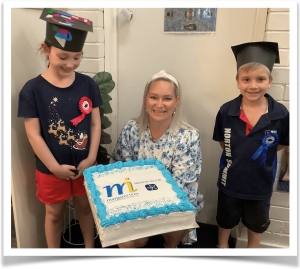
Educational Theory in action at Margaret Ives CCC
Hello everyone, firstly I’d like to introduce myself as an Early Childhood Teacher and the Educational Leader here at Margaret Ives Community Children’s Centre. I began my career in the Early Years Profession in 2004, and I love working with children in community-based centres. I love the diversity of the role, the pure joy children share and how being in these places feels like home. I am most passionate about relationship based learning and play-based curriculum and I am fascinated by the incredible brain development that occurs within the first years.
During the first decade of my career I lived and breathed primary caregiving, and during my leave I facilitated adult learning at the local TAFE and through Circle of Security Parenting courses. I commenced a Bachelor of Education - Early Childhood in 2014 and started at Margaret Ives CCC during 2015. I left in 2018 to work as a preschool teacher in another children’s centre. I was lucky enough to return back to Margaret Ives in 2020 and have since worked in a range of roles across the Coral and Jacaranda rooms and as Educational Leader. Through this role I work with staff regarding all things curriculum.
The idea for writing this blog came to me whilst on my last maternity leave. I think it is important to make evident the theory that underpins our practice… it may not often be spoken of, or obvious to the untrained eye. All of our Educators have undertaken during their training in some shape or form, studies in Educational Theory. These are wide ranging from theories very old to the more contemporary, all of which are important and provide integral insight into understanding the way that children learn.
I believe each site has their own collection of theories they value most, which influences their philosophy and pedagogical practices. Our overarching curriculum driver here is play-based learning, with relationships supporting children’s wellbeing. Here’s an insight into theories we base our practices on.
The Circle of Security and Attachment Theory
The centre uses a relationship-based approach, employing the “Circle of Security” model *. All three rooms utilise a Primary Care system. This ensures the children have the best possible chance to form a secure attachment. Berk * asserts that attachment can be defined as a strong bond we have with particular people in our lives that brings us delight and happiness when we interact with them and whom support us in times of need. Through attachment theory, John Bowlby and Mary Ainsworth stressed the importance of the quality of relationships between caregivers and children. They believe there are styles of attachment, each with differing characteristics. Furthermore, they introduced the concepts of secure and insecure attachment. Secure attachment is when a child trusts that their needs will be met; they can then express their emotions openly, developing skills for coping with stress and regulating their own emotions. Through developing that trust, the securely attached child is more able to pursue learning and exploration. Urie Bronfenbrenner stated “every child needs at least one adult who is irrationally crazy about him or her” *. At Margaret Ives, you will find this is supported through our Primary Care system.
Bronfenbrenner’s Ecological Systems Theory looks at the many layers that impact a child’s wellbeing and intersectionality. Our incredible leadership team are the glue which hold everybody together. They support our children, Educators, families, and community by providing a consistent roster as much as possible, enabling the whole primary care system to function at its best. Children build secure attachments first with their assigned Primary Carer, then secondary attachments with their regular team and casual room Educators. It is then that children are supported to feel comfortable building relationships with new staff who commence at the centre.
In particular in the Jacaranda Room, the Circle Of Security model and Attachment Theory heavily underpins the workings of the room. It is imperative this team works like a well-oiled machine as they support our most vulnerable children by forming secure attachments, simulating their home routines, and providing a safe base as they begin to explore the world. If you have ever witnessed this team in their glory, you would see baby whisperers who move like ninjas in the night, silently sashaying through sleep rooms, communicating with one another, seemingly telepathically attuned to each child’s needs with attention to detail. They gently scaffold the babies to explore with their senses, and provide a predictable routine with tender nurture and care.
Research into brain development has discovered that the brain is at its most plastic during the first two years. During these vital years of development, neurons in the brain form connections when stimulated by involvement from the surrounding environment. Brains are hardwired for interaction and attachment, meaning when children encounter positive relationships, the brain develops naturally. Educators offer stimulating environments and initiate good quality relationships with infants, providing the opportunity for the type of learning the brain needs in order to develop *.
For more information visit:
https://www.circleofsecurityinternational.com/circle-of-security-model/what-is-the-circle-of-security/
Erikson’s Stages of Psychosocial Development
Erikson asserts there are eight stages of psychosocial development*. The first being “Trust Versus Mistrust”, most relevant for the birth-18 months age group. This is when infants rely most on others to care for them, with Educators responding to their cues and meeting their needs. When infants learn to trust, they feel safe and secure. Secondly, “Autonomy Versus Shame and Doubt” developed around 2-3 years when children gain autonomy as Educators encourage independence and self esteem through providing choice and control. Thirdly, around 3-5 years children develop through “Initiative Versus Guilt”, asserting themselves through social settings. If successful, children will feel more confident and capable.
Admittedly, I have not spent much time physically in the Bottlebrush room. However I hear the stories, see the videos, photos and feel the buzz from the room. This team is connected and in tune with one another on a deep level. They extend children’s capabilities and confidence in themselves through the opportunities they provide children, along with the scaffolding required to support each individual through Vygotsky’s* Zone of Proximal Development- the difference between what a learner can do without help and with help. The deep relationships they hold with each child, secure attachments, allow enriched learning through powerful connection, building confidence and resilience to take risks through play or to share their voice and whispers. Importantly, practices and rituals embedded within the room routines ground the children, enabling them a predictable, soft landing for the ever changing lives they experience around this age and stage development.
Partens’ Stages of Play* are supported in the Bottlebrush room including Onlooker (2 years), Parallel (2+ years) and Associative (3-4 years). According to Parten, as children grow and develop communication skills, they engage in more complex, social play scenarios. Educators provide the opportunity and support children to build on social skills as they move from parallel to associative play.
Nathan Wallis Neuroscience Educator, whom the whole staff team attended a training session with during January 2021, heavily influences the Bottlebrush team. He talked with us about the importance of a child’s primary relationships, the physical interactions and responsive language shared within that relationship particularly throughout the first 1000 days. Sarah Bowden, Bottlebrush Team Leader, speaks of the importance of Educators having the flexibility to adapt to both younger learners and to grow and extend as the children develop.
Principles of the Reggio Emilia approach
The Reggio Emilia approach introduces many facets of its philosophy to the Early Childhood profession including holding a strong image of the child, and viewing children as competent and capable. Secondly, “The Hundred Languages” highlights diverse learning styles and advocates for all children’s voices. Additionally, Educators utilise the environment as the third teacher. This places children at the centre of learning, focuses on what they can do and involves them in the learning process*
For more information visit https://www.reggiochildren.it/en/loris-malaguzzi-international-centre/
In the Coral Room in particular we utilise principles of the Reggio Emilia approach and Social Constructivism theory, supporting children to scaffold each others’ learning. We utilise an “emergent curriculum”* designing inquiries based on children’s curiosity. We explore the broader community through regular walks to local services, attending school assemblies, each term and engage with Indigenous Elders learning Kaurna language and cultures. During our regular team meetings, Educators use dialogue to engage in critical reflection regarding the children's strengths, interests and future goals, planning how best to support and extend learning.
Our curriculum, the Early Years Learning Framework, asserts that secure relationships provide a basis for children to learn and interact with others*. In the Coral room we continue our primary care system, placing importance on building secure attachments with children and strong secondary relationships through interactions, sharing in positive moments, communication, consistency and knowing children on a holistic level.
*reference list available on request
Hayley Sidelik
Educational Leader MICCC
Kaurna Yerta
Here is a fun topic to read about if you get a spare 5 minutes. Something no one tells you about during pregnancy and birth classes, but it’s something all parents face eventually and for some it can be quite daunting. Toilet training, toilet learning, potty training…it’s a wild ride!
In the Bottlebrush room at the moment, we have had a large influx of children that have started to show signs of readiness for toilet training.
This is a huge milestone in the life of a little person. Toilet training is a big deal to children as it represents a major step towards growing up, gaining independence, and receiving positive reinforcement and approval from significant adults in their lives.
Toilet training allows children to take charge of a basic self-care task. It’s something they can do for themselves and for possibly the first time in their lives, something their parents and caregivers have very little control over.
As educators we have assisted and supported in the toilet training of hundreds of children over the years. We’ve seen and heard it all! One little friend was desperate to try stand up wee’s just like her brother, another friend definitely wouldn’t be using the toilet ever at childcare unless it was a Saturday, we have the low down on all the jocks and knickers and are often asked to divulge if we too have Bluey undies on as children proudly want to share what they are wearing with us.
No two experiences are the same. Like everything else within our program, we view each child as an individual and each toileting “journey” (I hate that word) is unique. We aim to work closely with families, offering advice and strategies and a solid plan for success.
I’ve had a few conversations over these last couple of weeks during which I referenced my own experiences as a parent and I thought they might be useful to share with everyone.
(My children gave me permission to share these stories)
My eldest son was a quiet little soul with pretty solid language skills at the age of two. He showed a strong interest in using the toilet before bath time each night and when waking up in the morning. He asked to wear jocks “like Daddy” to childcare and I decided to consult with his primary carer the amazing Kasha. Even though we had just had our second baby and it was the middle of winter she agreed he was definitely capable and ready. Kasha helped me understand the importance of not missing the “enthusiasm window”. If a child demonstrates an interest, we always want to honour that. It may not always feel like the right time but if you miss the window, it can be much harder to regain their interest. I explained that we were offering a chocolate at home every time he was successful on the toilet. With a secret stash in the cupboard Kasha literally had him toilet trained in TWO DAYS at childcare with no accidents and he never looked back. It was just SO EASY……too easy……..and regardless of my years of experience and professional knowledge that no two children are the same, I was certain that our toilet training experience with my younger son would definitely be exactly the same. What an idiot.
As a two year old my VERY different and very busy youngest child had no interest in toilet training whatsoever. At all. He had much more important things to do - like playing. His primary carer Arja reminded me not to push him too early and we waited it out until he was much closer to 3 and he finally told me he would like some jocks like his big brother. I thought ‘yes-this is it!’. After another chat with Arja, we agreed he might be ready to have a try. At home and at childcare he did his best and had an average amount of success vs wet jocks for the times he was too busy being a superhero, jumping on the trampoline, when he just forgot to go, or he didn’t actually want to stop what he was doing. I was reminded that I had a completely normal and typical child. In several weeks we had gotten there with the wee’s with loads of encouragement, role modelling by his childcare friends and the help of stickers and chocolates-hooray!
Poos were a completely different story. He just wouldn’t do them in the toilet. He couldn’t explain why, even when I offered him the answers. Was he scared or worried? Did he understand how toilets work? Was the toilet too big? Did he dislike the flush? - nope. His answer remained the same throughout. A firm and determined “I just don’t want to”. We offered our child more stickers and chocolate, we offered him toys, treats, money, a car, an overseas holiday (were we on a game show?) ….. it didn’t matter. He just didn’t want to do it. He wasn’t ready and all we could do was wait it out.
Where did he do his poos?
It was an exercise in patience, and I definitely thought the day would never come, but eventually one day for no particular reason and with no incentive - it did happen. When he was ready, when he felt in control of what was happening to his body and when he felt comfortable. Overall, his toilet training took around 4 months before I would say he was completely confident to toilet independently and with no accidents. So, a little bit different to just two days - but my second experience was by far the more “usual” experience.
Many toilet training children struggle with doing poo’s on the toilet at first. It’s completely normal and there is no linear time frame of how long it will last. As frustrating as it is, as their parents and educators we just need to ride it out with as little fuss as possible. The most important priority for us as educators is that children don’t feel fear or worry about what will happen if they do have an accident. This makes children anxious, unable to engage in meaningful play and often they will try to “hold” which makes them very uncomfortable.
If your child is struggling with doing poos in the toilet, let us know. We are always happy to offer them a nappy or a pull up if they would prefer to use one just during that time. It can be a good transitional step and also provides them with the chance to get to understand their bodies natural cues. Some children can be very distressed by soiling their underwear and some don’t care in the least. For hygiene reasons we always encourage children to tell an adult if this has happened, but we never place any kind of shame or blame on children.
The Bottlebrush Do’s and Don’ts of Toilet Training.
Do
-Ask us for our handy leaflet on toilet training readiness
-Follow your child’s lead. Trying to toilet train a child who isn’t ready never works.
-Use anatomically correct terms when your child is learning to use the toilet. We always refer to children’s genitals as their penis, vulva and bottom.
-Celebrate all the successes! We always offer children a sticker/stamp chart that they can see throughout the day and share with pride at pick up time. We can also use stickers and stamps if you wish to convert them into something a bit more motivational i.e. for every wee your child might get a smartie when they get home. This is entirely up to you. We never give treats or make promises without your express instruction/permission.
-Pack heaps of changes of clothes. Ensuring all waist bands are stretchy and easy for your child to manage.
Don’t
-Worry if your child shows no interest in toileting when you expect them to. There is absolutely no rush. Please note, your child does NOT need to be toilet trained to move through to the Coral Room.
-Buy expensive jocks and knickers and send them to childcare. If a child has a poo accident, we will dispose of unsalvageable underwear.
-Send your child in underwear without discussing it with your child’s primary carer in advance. It’s great to have a collaborative plan so we can prepare a sticker chart and begin encouraging conversations.
-Blame or shame for any accidents that happen
-Worry about how many accidents your child may have here. Childcare is a very busy and different environment to being at home and it’s easy to get distracted.
If you would like to discuss any of this further, please don’t hesitate to reach out.
Sarah Bowden
Bottlebrush Room Team Leader
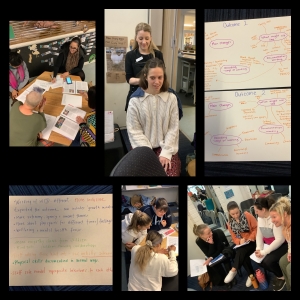
On Saturday 1st of July, Jo and and I held a training for our staff team presenting the changes to our recently updated Early Years Learning Framework: Belonging, Being and Becoming. The new version brings contemporary practice introducing three key focus areas comprising Aboriginal and Torres Strait Islander perspectives, Sustainability, and Well-being. This brings the document inline with the Australian Curriculum (school curriculum) and My Time Our Place (the Out of School Hours Care learning Framework) as well as a better connection with the National Quality Standards. Emphasis is placed on children becoming successful life long learners, active and informed citizens, and better recognises and celebrates the diversity of children, families and communities.
Here is a link for the short video we played with some important information regarding the changes.
https://levo-4.wistia.com/medias/2aq7q29vcp. (Source: https://www.acecqa.gov.au/ )
And a link for the updated version of the Framework for those who are interested.
https://www.acecqa.gov.au/sites/default/files/2023-01/EYLF-2022-V2.0.pdf
During our session we explored key changes to the five Learning Outcomes, and the Principles and Practices. Staff workshopped a range of questions, crafted from my own wonderings during two trainings I attended through Gowrie SA and Semann & Slattery, key leaders in training in the Early Childhood Profession.
There was a buzz in the air as staff worked in their teams and then in groups of three to answer the questions. Rigorous discussion was had during sharing time, with staff reflecting on what we already do to meet these outcomes and what perhaps we could do next.
To finish off we reviewed our current documentation and incorporated key points for example
The icing on the cake was the shoulder masseuse, the fun icebreaker activity where we learnt some interesting facts about our colleagues, and Crisy’s amazing breakfast spread that topped the morning right off! It was a fantastic session and I am so proud of our team, their dedication and their effort during their well earned time off.
Following on from the training we set the staff a challenge to present their new knowledge and practice to our greater community via Facebook posts which are also emailed out to our families, so do keep an eye out for more information upcoming.
If you’ve read this far and have further interest, please don’t hesitate to have a conversation with any of our staff team, or myself.
For further reading take a look at the link provided to the new Framework, some points of interest may include:
Early Childhood Pedagogy, page 12 and 13
The Principles, page 14
The Practices, page 20
The EYLF planning cycle, page 27
The Learning Outcomes, commencing page 30
The Glossary, page 64
References, page 70
For reference:
Australian Government Department of Education [AGDE] (2022). Belonging, Being and Becoming: The Early Years Learning Framework for Australia (V2.0).
Hayley Sidelik
Educational Leader MICCC
